GBSB Global Business School at a glance
GBSB Global Business School sits in central Barcelona, in Eixample just off Aragó Street. That puts the campus in one of the city’s most connected and student-friendly areas, where the real decision is usually not whether you can get to class, but how much you want to pay for the commute you get.
For most students, the best housing strategy is simple:
- Closest and most convenient: Eixample and Sant Antoni
- Best balance of value and lifestyle: Gràcia and nearby central districts
- Best for newer residences and more space: Poblenou and parts of Sant Martí
If you want a short walk or an easy bus/metro ride, focus on central Barcelona first. If you want a lower rent, look a little further out, but keep transport time realistic.
Best areas to live near campus
Barcelona’s student housing market is very local. A place that looks “central” on a map can still feel far if you are crossing the city at rush hour. For GBSB Global, the most practical areas tend to be the ones with straightforward access to Eixample.
| Area |
Why students like it |
Best for |
Watch out for |
| Eixample |
Closest match for the campus area, lots of services, strong transport |
Students who want convenience and a central address |
Higher rents, older buildings in some streets |
| Sant Antoni |
Walkable feel, good food shops, popular with young professionals and students |
Balanced city living and everyday convenience |
Good flats go fast |
| Gràcia |
Strong student vibe, cafés, smaller streets, lively but more residential |
Students who want character and social life |
Commute is a bit longer than Eixample |
| Poblenou |
Newer buildings, more student residences, more space in many developments |
PBSA seekers and students wanting modern rooms |
Can be pricier in newer stock |
| Sant Martí |
Broad area with some good-value pockets and residence stock |
Students looking for newer housing and less cramped layouts |
Always check the exact street and transport links |
If you are arriving for a short course, exchange period, or the first term of a postgraduate programme, Eixample and Sant Antoni are the safest first search areas. If you are staying longer, you can widen the search to include Gràcia and Poblenou once you know your budget.
Accommodation types that make sense here
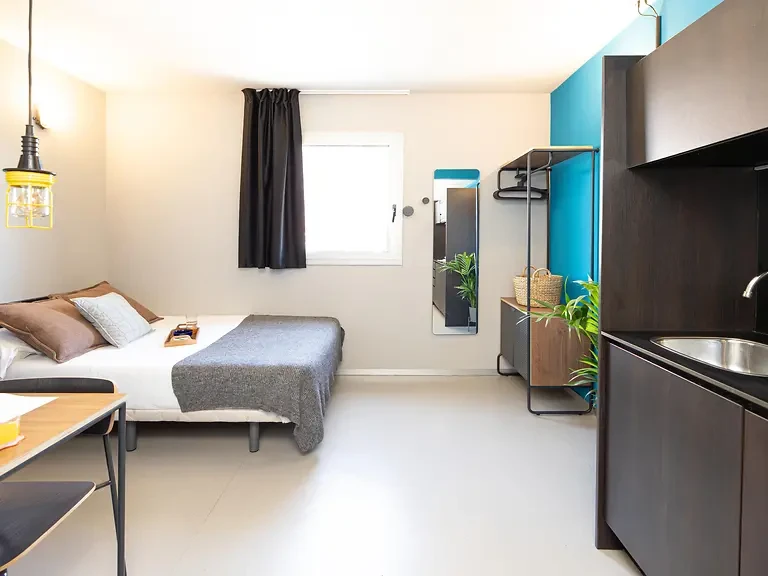
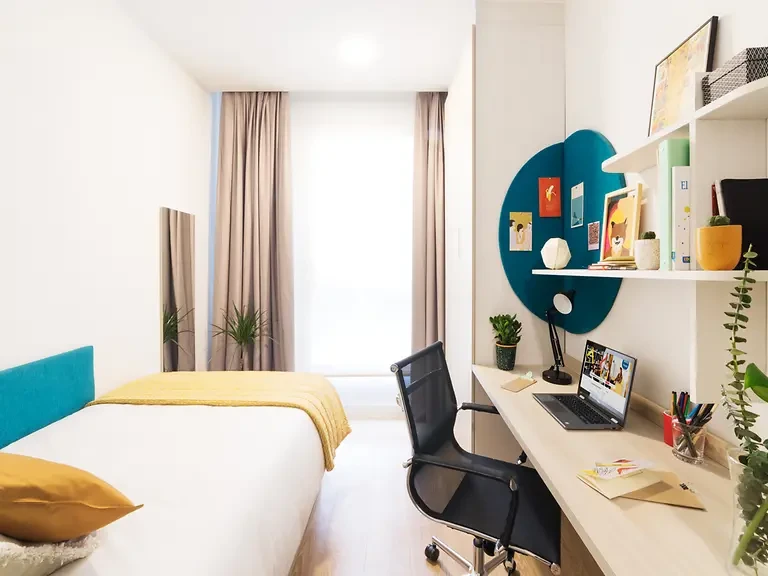
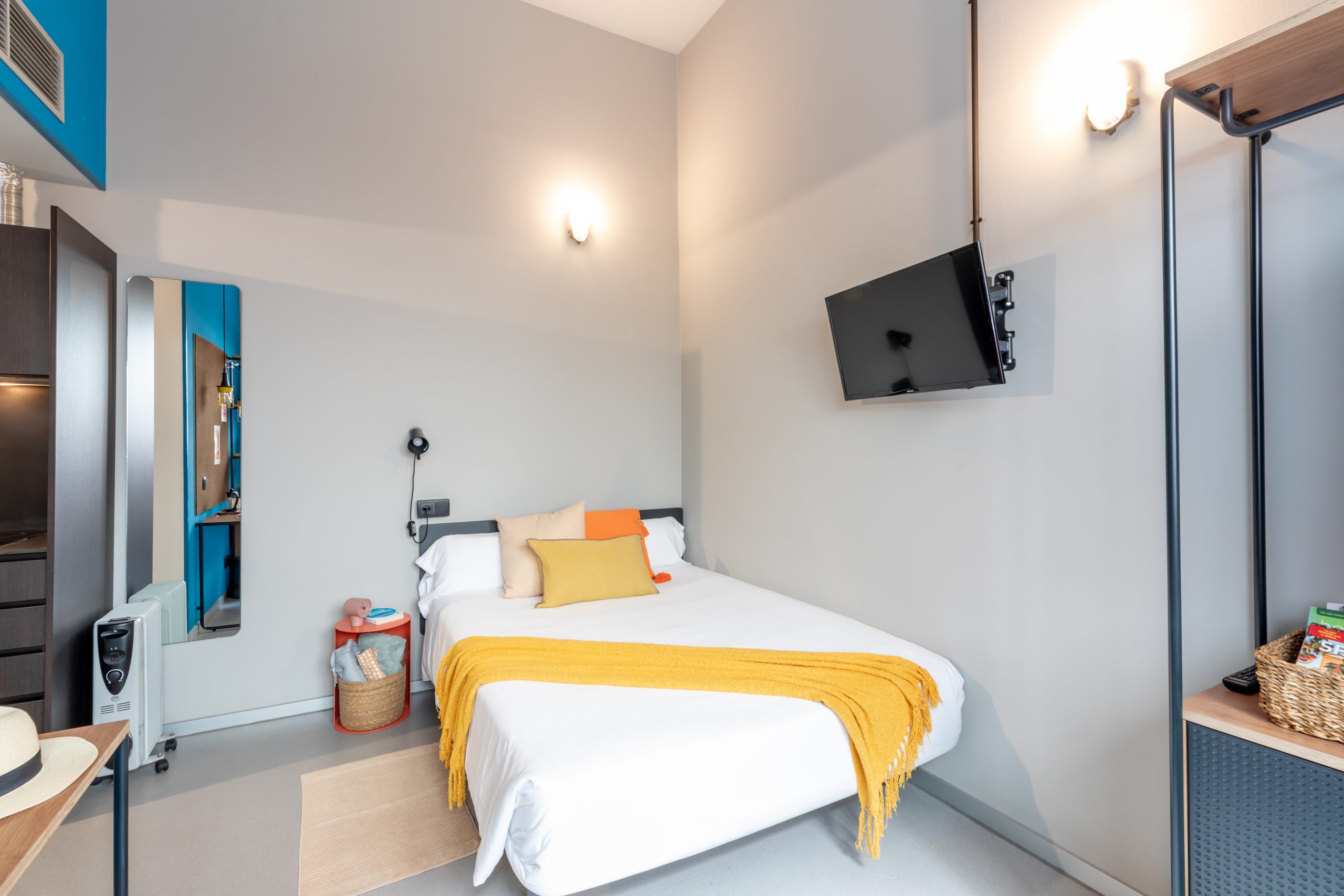
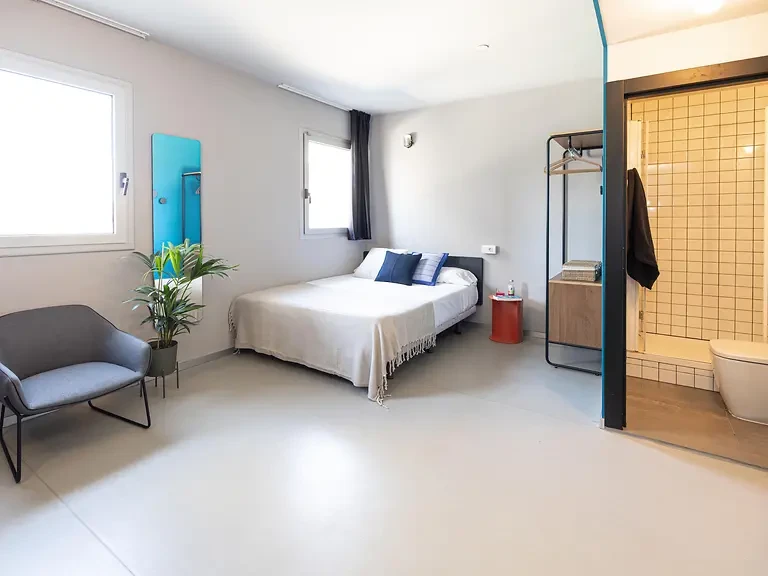
GBSB Global attracts a lot of international students, so the local market includes a mix of private rentals, PBSA, studios, and shared flats. The right choice depends on whether you want convenience, privacy, or the lowest monthly cost.
| Type |
Typical monthly cost |
What you get |
Best for |
| PBSA / student residence |
€850 to €1,150 |
Furnished room, bills included, shared social spaces, on-site support |
First-time arrivals, international students, short stays |
| Shared flat room |
€650 to €950 |
Private bedroom, shared kitchen and living space |
Students who want lower rent and a city-neighbourhood feel |
| Studio |
€1,050 to €1,500 |
Private kitchen and bathroom, more privacy |
Students who work from home or want quiet |
| Homestay |
€700 to €1,000 |
Room in a local household, sometimes meals included |
Short stays, language learners, younger students |
PBSA is usually the easiest option if you are moving to Barcelona for the first time. It cuts down on setup stress, and in a city like Barcelona that matters: you do not want your first week to be spent buying furniture, chasing utilities, and negotiating with a landlord in a new language.
Monthly cost guide
Barcelona is not a cheap city, but it is still manageable if you choose the right neighborhood and avoid overpaying for a studio you do not need. The largest cost difference usually comes from whether you live centrally and whether your bills are included.
| Budget item |
Low |
Typical |
Comfortable |
| Accommodation, city centre |
€850 |
€900 |
€1,150 |
| Accommodation, outside centre |
€650 |
€750 |
€950 |
| Food |
€220 |
€360 |
€520 |
| Public transport |
€30 |
€65 |
€110 |
| Local taxi / ride-hailing |
€45 |
€95 |
€170 |
| Miscellaneous |
€90 |
€125 |
€170 |
For many GBSB students, a realistic monthly budget lands in the €1,050 to €1,700 range, depending on room type and how central you live. If you choose a studio in a prime area, you can go well above that very quickly.
How to commute to class
The campus location is one of the strongest arguments for living centrally. Barcelona has solid public transport, but daily quality of life improves a lot when your trip to class is predictable.
- Best commute experience: walk or one simple metro/bus connection from Eixample or Sant Antoni
- Best compromise: Gràcia or nearby central districts with a direct route
- Best value with a longer commute: Poblenou and other Sant Martí pockets with good transport access
What matters most is not just travel time on paper, but the whole journey:
- Door-to-door time
- Number of changes
- Late-night return options
- Whether you can carry groceries or luggage comfortably
If your schedule includes late classes, networking events, or group projects, avoid a place that turns every return trip into a cross-city mission.
Booking timeline
Barcelona housing moves quickly, especially for furnished rooms and student residences near the centre. Start early if you want the best choice rather than the last available room.
| When you are arriving |
What to do |
| 4 to 6 months before |
Set your budget, shortlist neighborhoods, and decide whether you want PBSA, a shared flat, or a studio |
| 3 to 4 months before |
Contact residences, prepare documents, and compare contract terms |
| 6 to 8 weeks before |
Narrow down options and verify move-in dates, deposit rules, and cancellation policy |
| 2 to 4 weeks before |
Confirm final booking, ask about check-in, and arrange initial payments |
| Arrival week |
Inspect the room, photograph condition, and keep every receipt and contract copy |
If you are coming for an October intake, starting your search in late spring or early summer is sensible. The best central rooms rarely wait until the last minute.
International student paperwork
Spain does not use a UK-style “Right to Rent” check. Instead, landlords and residences usually want standard identity and enrolment documents, plus proof that you can pay.
Keep these ready:
- Passport or national ID
- Offer letter or enrolment proof from GBSB Global
- Proof of funds or bank statement if requested
- Guarantor details if you are renting privately
- NIE if you already have one, though many students apply after arrival
For PBSA, the paperwork is usually lighter than for a private flat. For a private rental, expect more questions and more deposit rules.
Scam prevention and contract checks
Barcelona is a popular market, which means good listings go quickly and fake ones also circulate. A careful approach saves money and stress.
- Never pay a deposit before verifying the provider and the exact address
- Use official websites, known platforms, or verified agencies
- Ask for the contract before sending money
- Check whether bills are included or charged separately
- Confirm the cancellation policy and refund rules in writing
- Search the address on a map and compare it with the photos
Be cautious if a landlord pressures you to pay immediately, refuses a viewing, or offers a price that looks far below the local market.
What to pack, and what is usually provided
Most student residences in Barcelona are furnished, but the level of setup varies. Shared flats can be much less complete, especially if you rent through a private landlord.
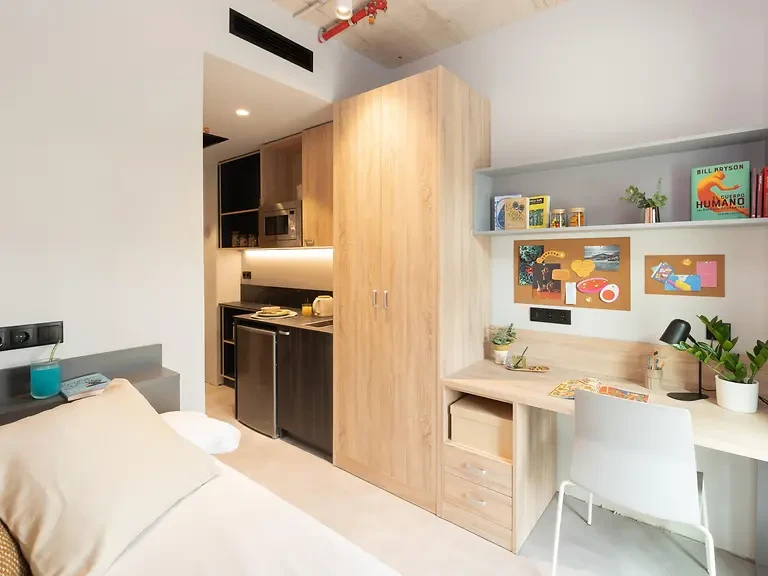
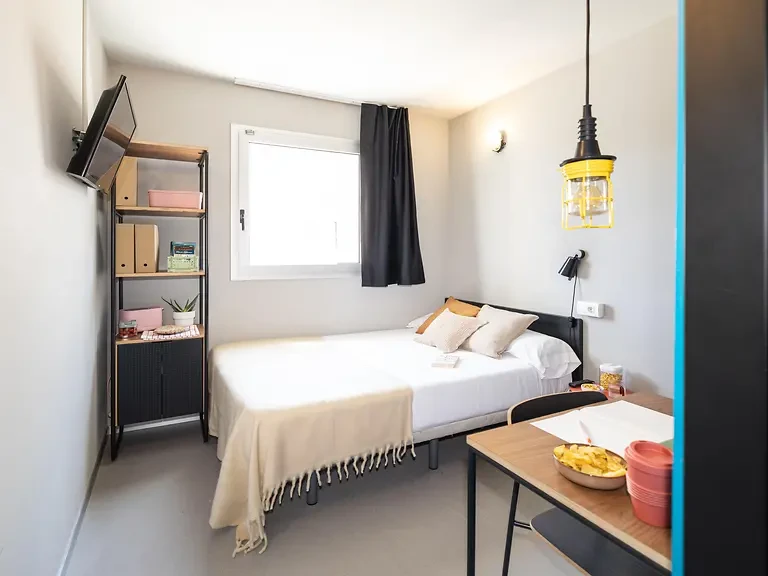
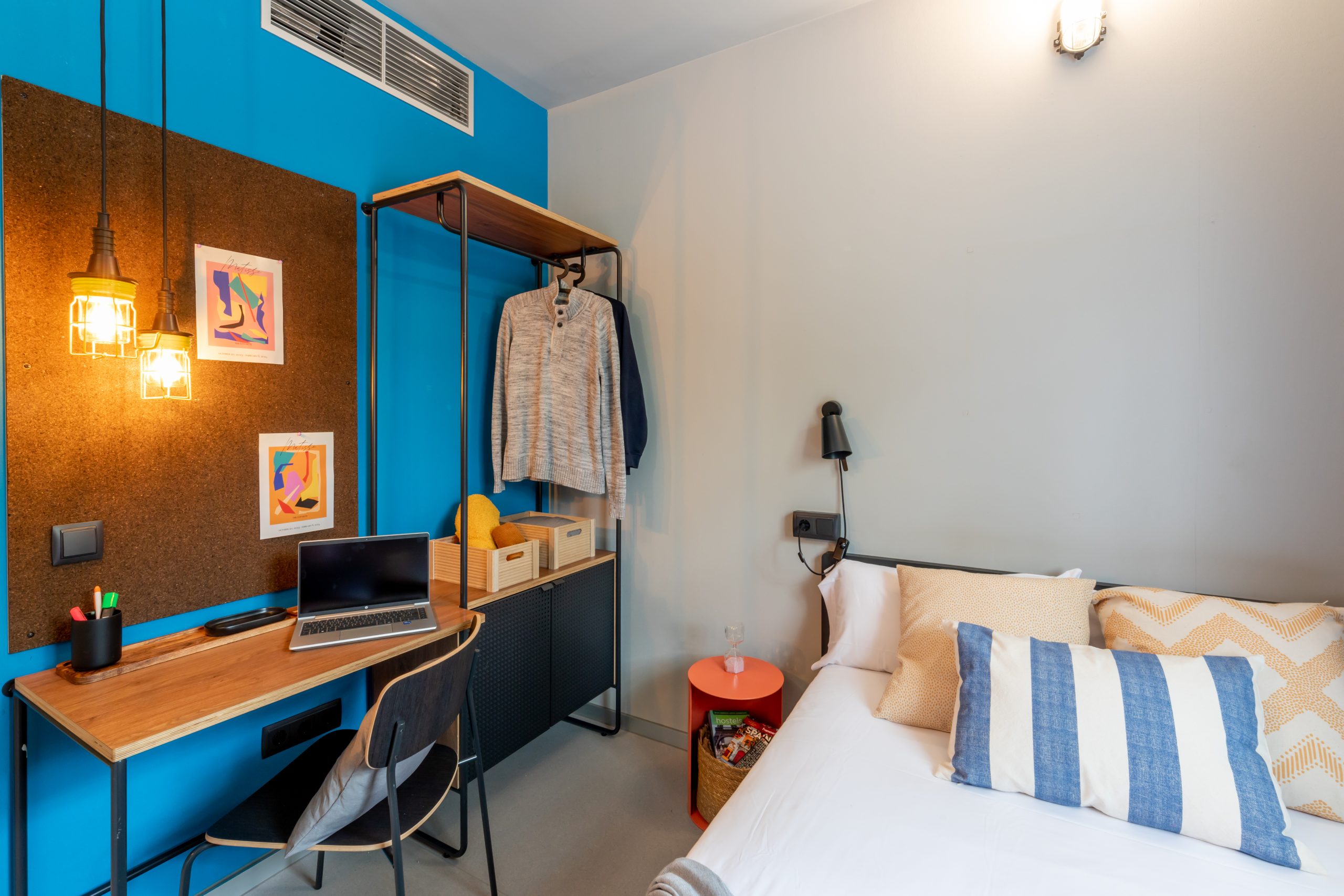
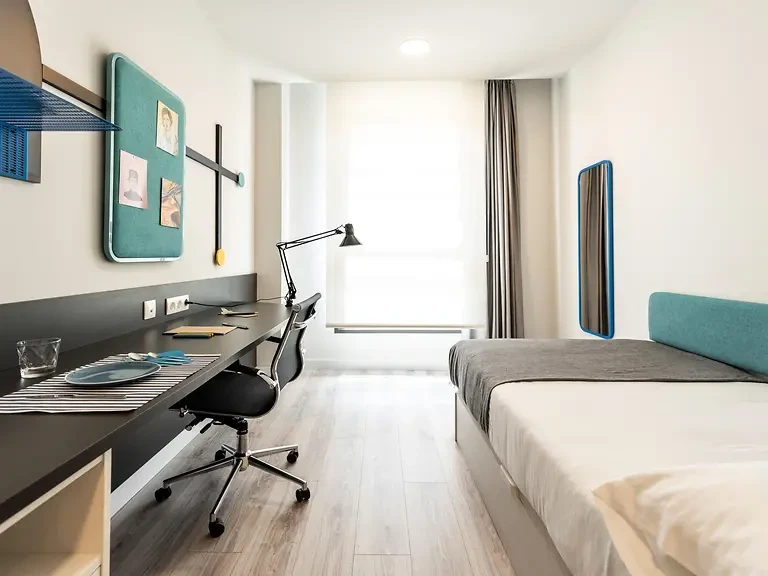
Usually provided in PBSA:
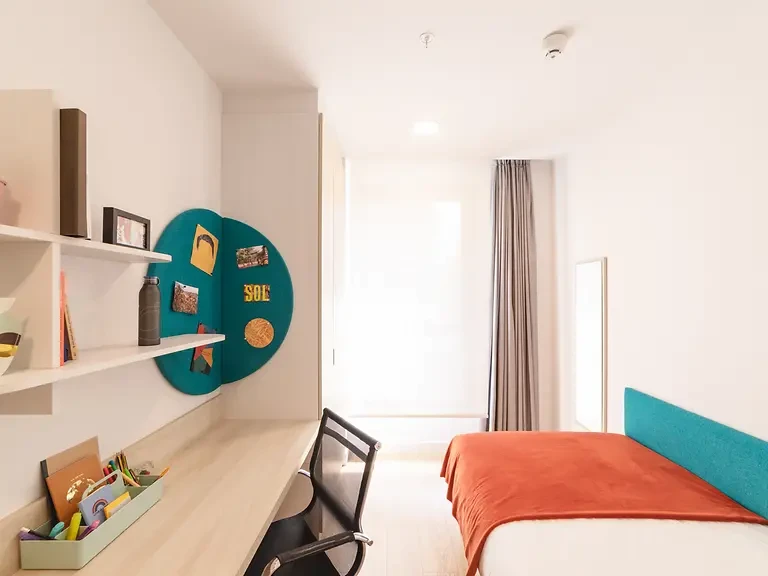
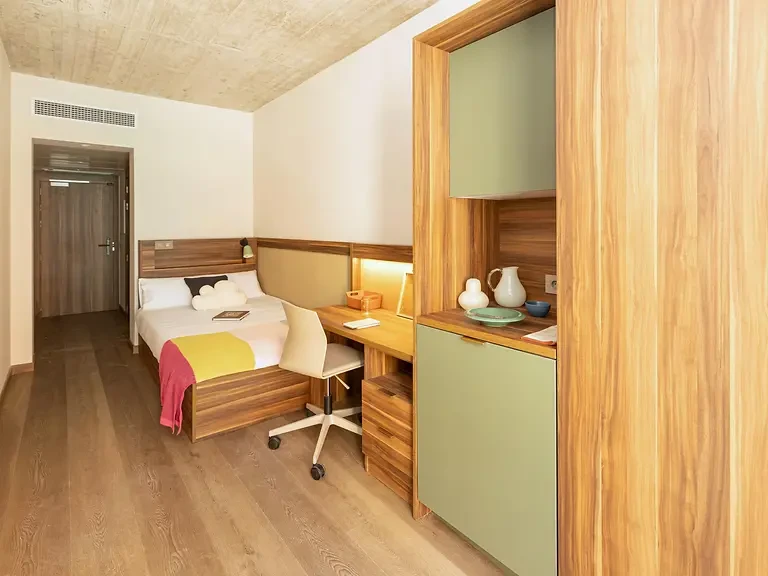
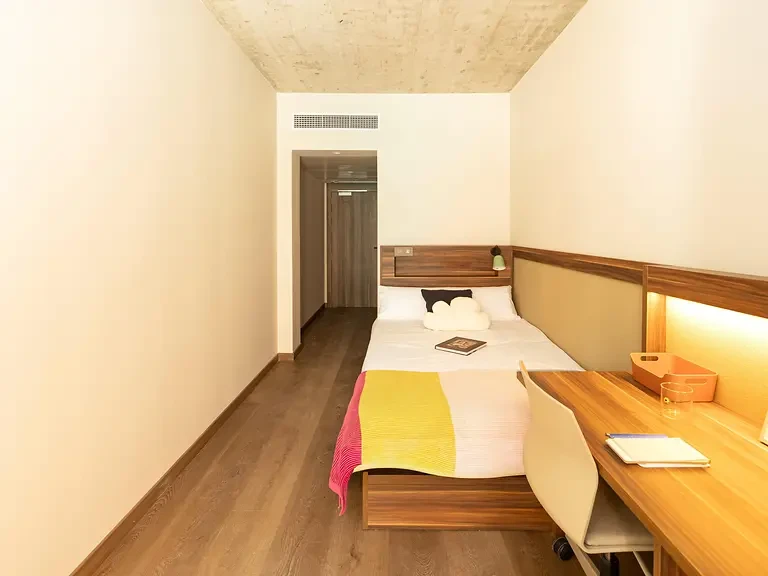
- Bed, mattress, desk, chair, wardrobe
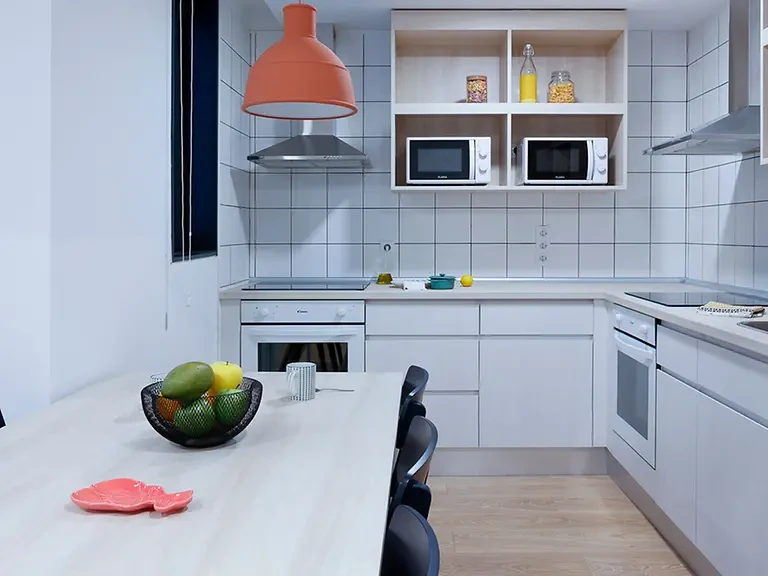
- Kitchen basics in shared areas
- Wi-Fi and utilities, often included
- Reception or on-site support in many buildings
Usually worth bringing:
- Power adapters
- Bedding if not supplied
- Basic kitchen items if you are in a flat share
- Medication and documents for the first week
- A small fan if you are sensitive to warm evenings and the room does not have strong cooling
If you are uncertain, ask for the inventory list before you arrive. That is the easiest way to avoid buying duplicate items on day one.
Accessibility and special requirements
If you need step-free access, a lift, a larger bathroom, or a quieter room, ask early. Barcelona buildings vary a lot: some newer PBSA properties are well adapted, while older central apartments may have stairs and narrow layouts.
Ask about:
- Lift access and step-free entry
- Accessible bathrooms or adapted rooms
- Air conditioning
- Quiet floors or noise-sensitive options
- Ground-floor rooms if stairs are difficult
- Proximity to transport if walking long distances is a problem
The best time to mention special requirements is before paying a deposit, not after.
Final recommendation
For GBSB Global Business School, the best overall housing choice is usually a furnished room in PBSA or a well-located shared flat in Eixample, Sant Antoni, Gràcia, or Poblenou. If you want the simplest move, go for a residence near the centre. If you want to save money, move one step out of the very centre, but keep the commute sensible.
In Barcelona, the right room is not just the one with the lowest price. It is the one that makes your daily routine easy enough that you can focus on studying, networking, and actually enjoying the city.