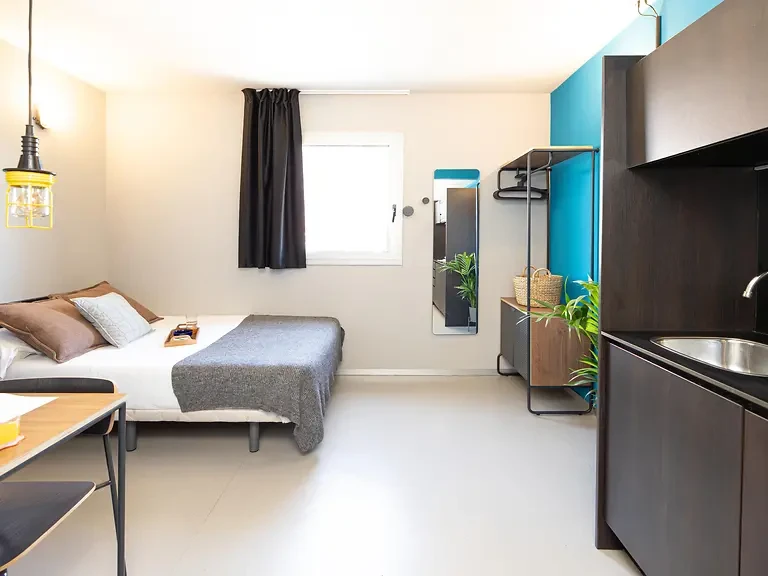
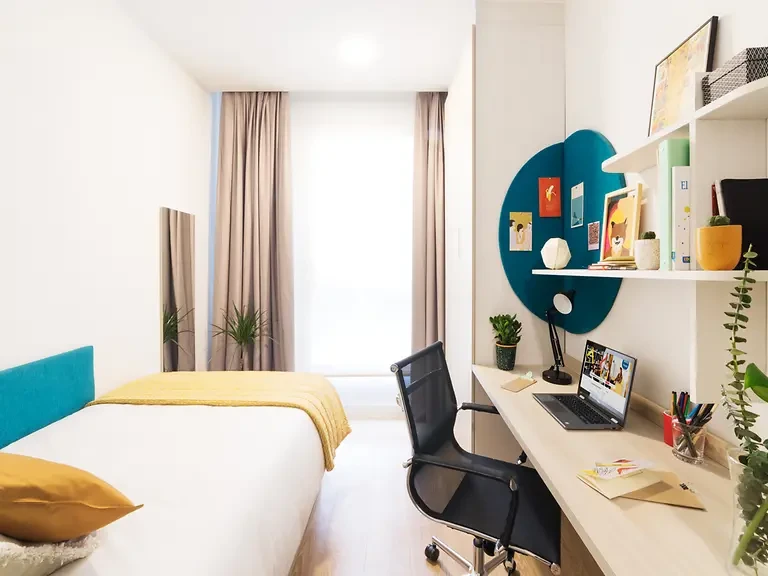
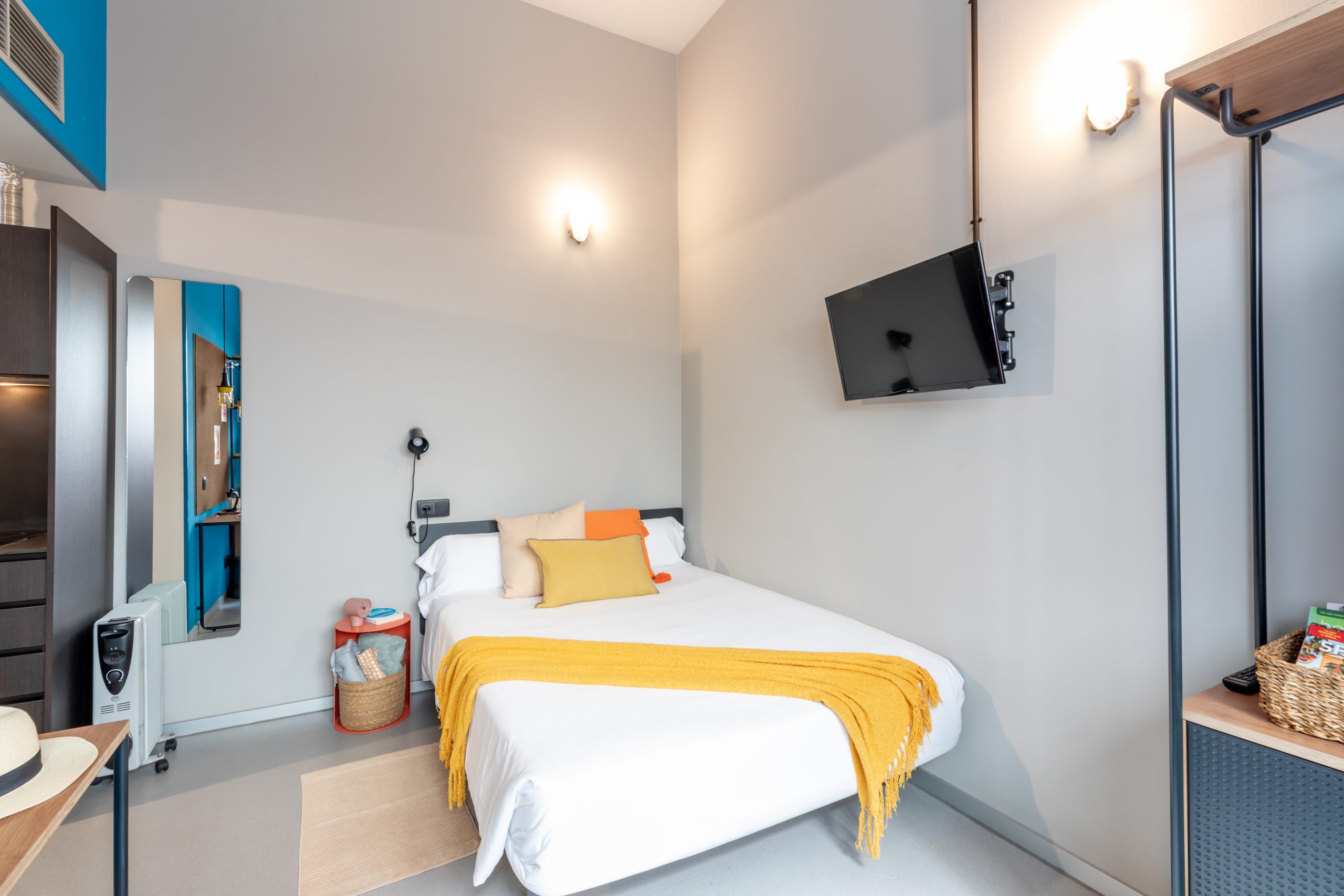
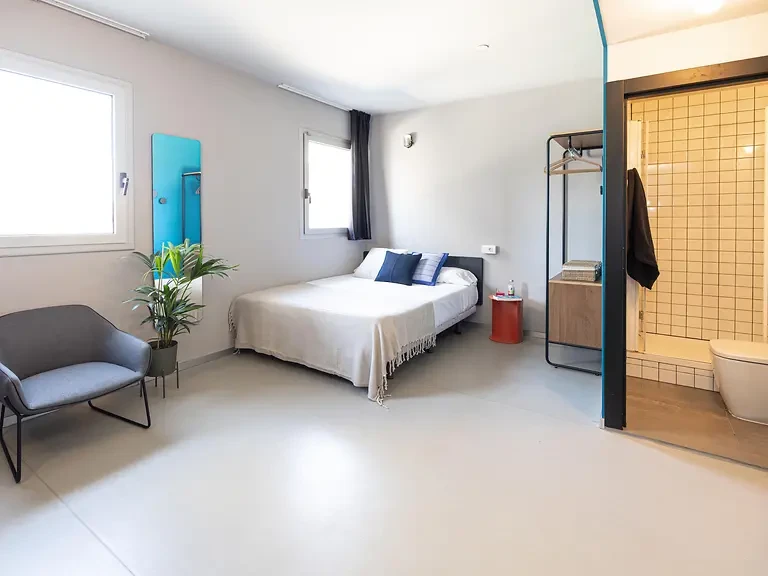
Accommodation near Davinci Escola d'Art
Davinci Escola d'Art is based at C/ Roger de Lluria 104, Principal 1a, 08037 Barcelona, in the Eixample area of the city. That puts the school in one of Barcelona's most central, best-connected districts, which is useful if you want to balance studio time, classes, and a social life without long commutes.
The school focuses on drawing, painting, illustration, and experimental techniques, and it offers flexible timetables and year-round teaching. For students, that usually means the best housing is not the cheapest option on the map, but the one that makes it easy to get to class regularly and keep your routine stable.
Best areas to live
If you want the shortest commute, look first in Eixample Dreta and the streets around Passeig de Gracia, Diagonal, and Girona/Verdaguer. If you want more value without losing central access, move one step outward into neighbourhoods that still connect quickly by metro or bus.
| Area |
Why students choose it |
Trade-off |
Typical monthly room budget |
| Eixample Dreta |
Closest match for the school, elegant streets, easy public transport |
Highest prices and less flexible availability |
EUR 750 to EUR 1,100 |
| Gracia |
Lively student feel, good cafes, strong transport links |
Some streets are quieter but farther from the school on foot |
EUR 650 to EUR 950 |
| Sant Antoni |
Good value for central Barcelona, practical for daily errands |
A slightly longer commute |
EUR 600 to EUR 900 |
| Poblenou |
Newer buildings, more space, often better value for money |
Longer journey into the centre |
EUR 650 to EUR 1,000 |
| Ciutat Vella / El Born |
Very central and walkable |
Noisier, tourist-heavy, and usually pricier for what you get |
EUR 700 to EUR 1,100 |
For most students, Eixample and Gracia are the easiest first search. If you want more space or a newer building, Poblenou can work well, but only if the commute still fits your schedule.
Best accommodation types
Barcelona gives you a few realistic options, but the best fit depends on how much independence you want.
| Type |
Best for |
What to expect |
Typical monthly cost |
| PBSA / student residence |
First-time movers, international students, and anyone who wants a simple all-in setup |
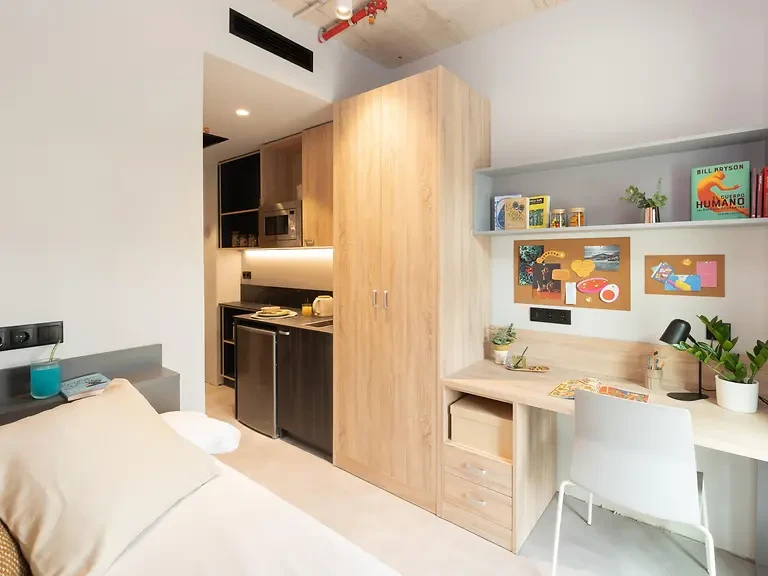
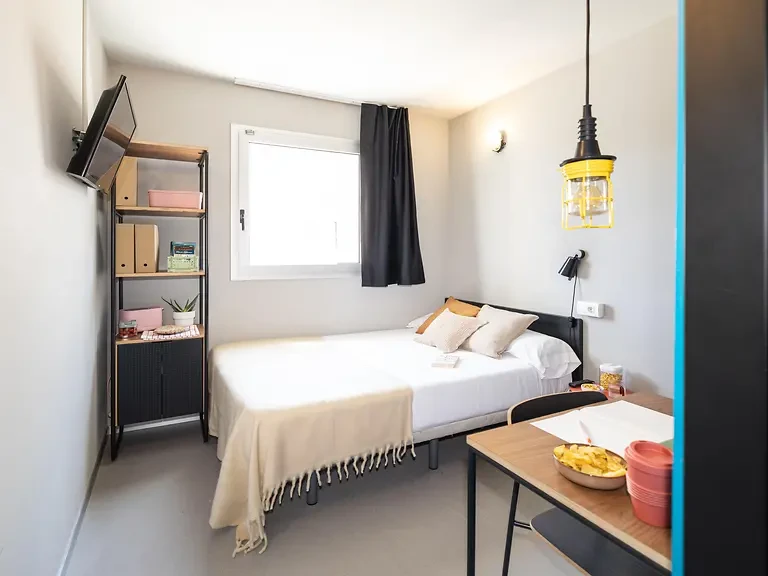
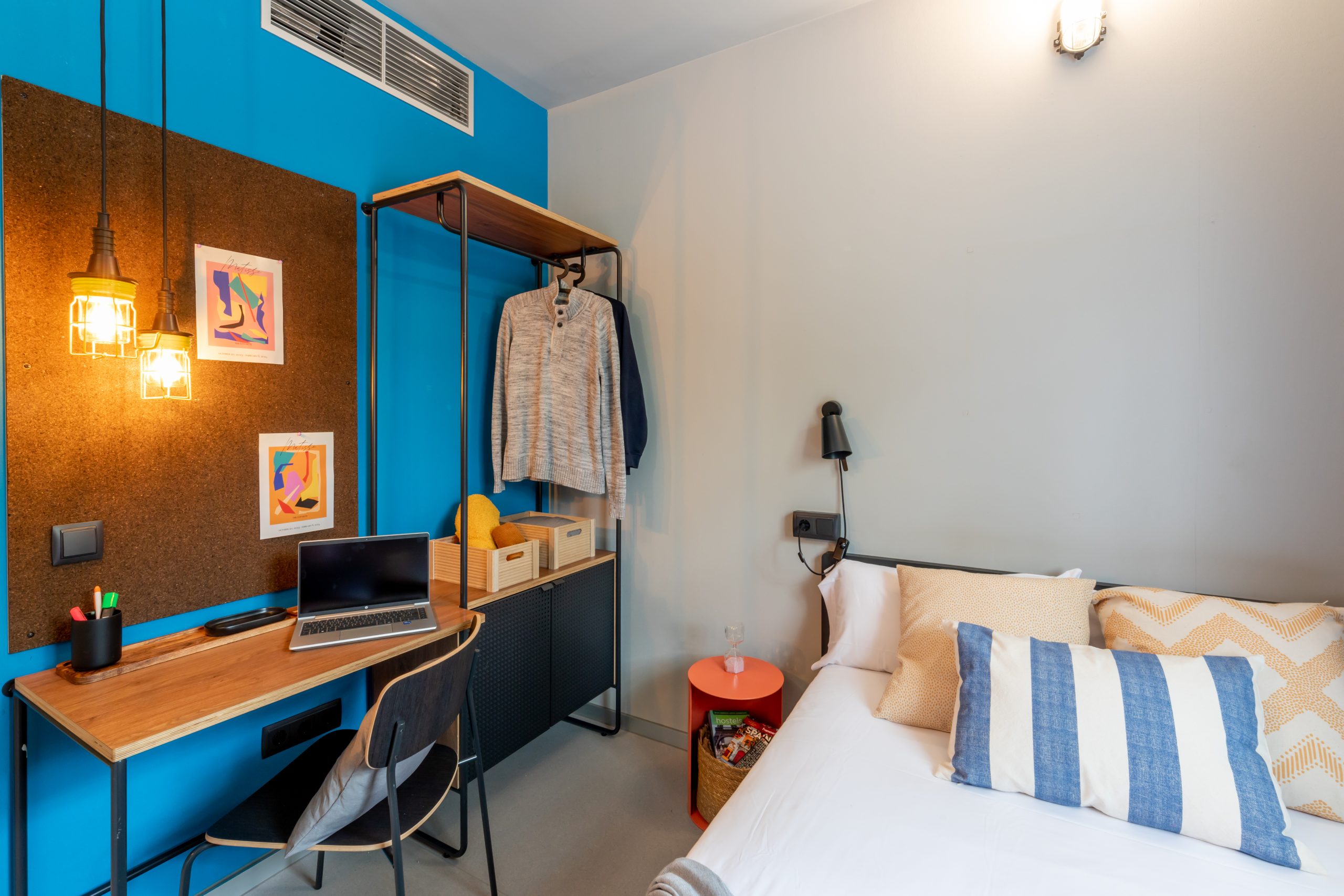
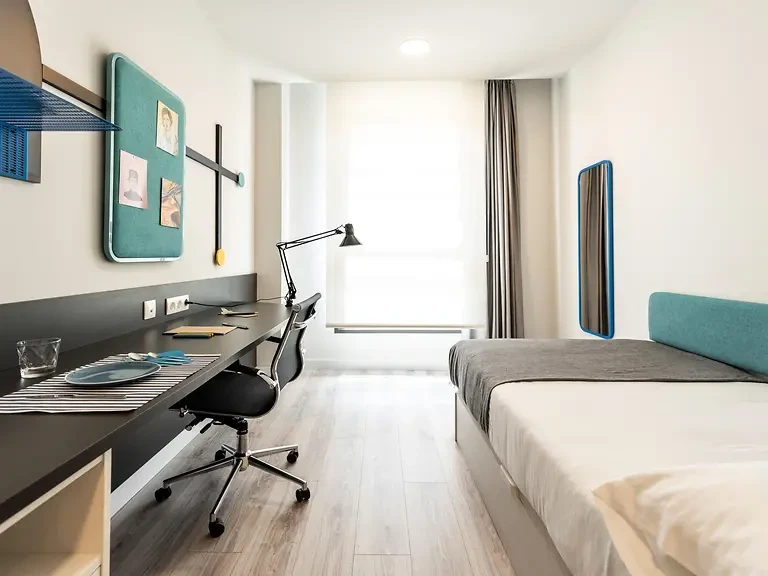
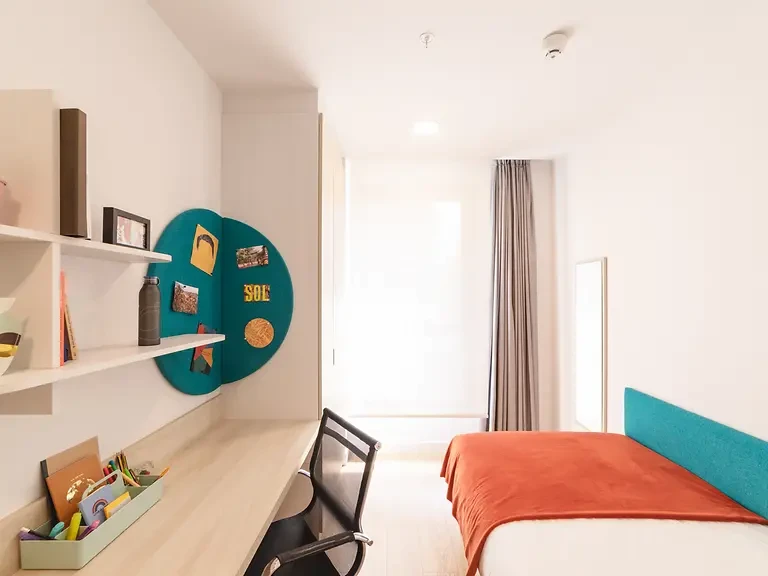
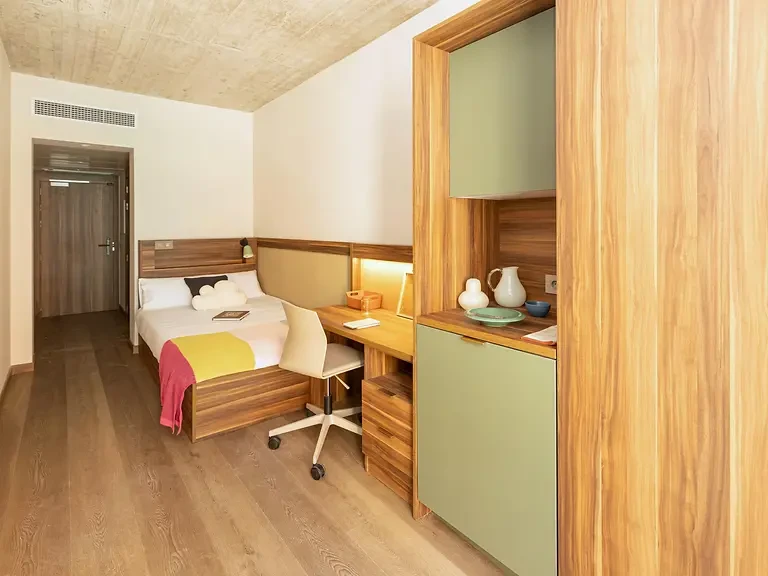
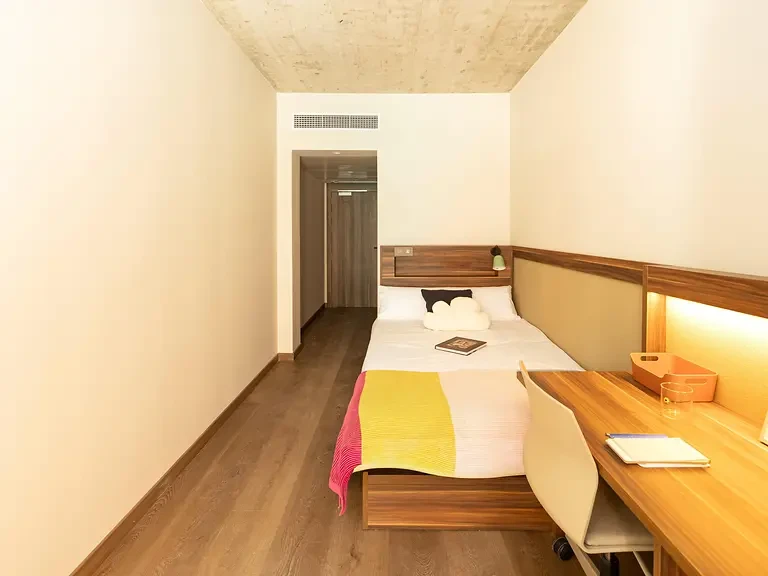
Furnished room, bills often included, study areas, security, easier admin |
EUR 850 to EUR 1,350 |
| Shared flat |
Students who want the most common Barcelona setup |
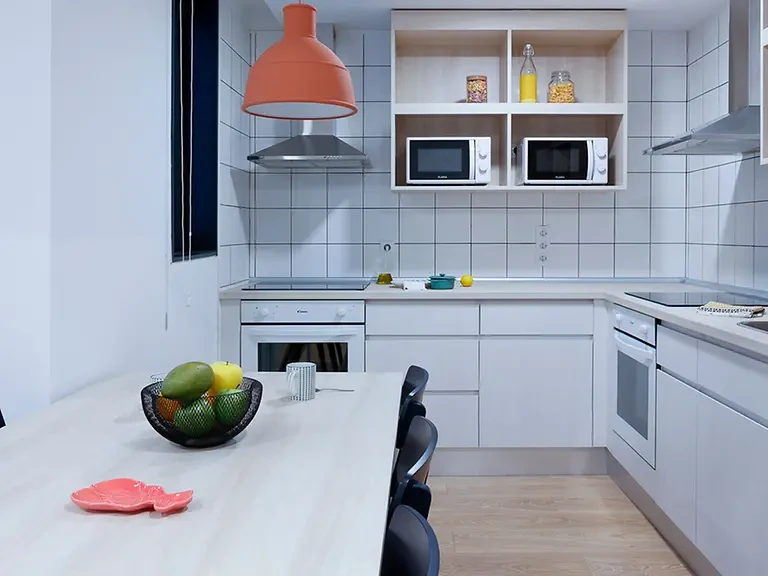
Private bedroom, shared kitchen and bathroom, lower cost than a studio |
EUR 650 to EUR 950 |
| Studio |
Students who need privacy for portfolio work or quiet practice |
Fully private space, but usually the most expensive option |
EUR 1,100 to EUR 1,700 |
| Homestay |
Younger students or anyone who wants extra local support |
More structure, meals may be included, less independence |
EUR 750 to EUR 1,050 |
| Private apartment |
Students sharing with friends or staying long term |
More control, but higher upfront costs and more admin |
EUR 1,500+ for the whole flat |
If you are arriving for the first time, PBSA or a shared flat is usually the safest starting point. You get a faster move-in, less paperwork, and less risk than trying to secure a private apartment from abroad.
Why central Barcelona costs more
Barcelona remains a tight rental market, and central districts keep their premium because they are walkable, well-connected, and popular with students, professionals, and short-term renters.
Idealista's March 2026 rental data shows Eixample among the city's priciest districts, so you should expect central rooms to cost more than outer areas. That is normal here. The practical question is whether you want to pay a premium to save time and reduce travel stress.
For art students, that trade-off often makes sense because your schedule may change around studio sessions, portfolio deadlines, and exhibitions. A slightly more expensive room near the school can be cheaper in real life if it saves repeated taxi fares, late-night travel, or time lost in commuting.
Getting to class
Barcelona's transport system is strong enough that most students do not need a car. TMB's metro network has 8 lines, and the integrated fare system lets you combine metro, bus, tram, and commuter rail within the same ticket rules.
Practical commuting advice:
- Use the metro and bus network for everyday travel rather than relying on taxis.
- If you live in Eixample, Gracia, or Sant Antoni, you can usually keep the commute simple and avoid long transfers.
- If you are house-hunting, check the walk from the nearest station to the front door, not just the district name.
- If you have evening classes, choose somewhere with a straightforward return route and good street lighting.
For this school, the most useful housing search question is not "What is the cheapest room?" but "What room lets me get to Roger de Lluria easily on a normal weekday?"
Suggested booking timeline
For a September arrival, start early. Barcelona's best-value rooms and student residences can move fast, especially in the central districts.
- 4 to 6 months before arrival: shortlist neighbourhoods and decide whether you want PBSA, a shared flat, or a studio.
- 3 to 4 months before arrival: start serious viewing and application work.
- 2 months before arrival: lock in the room if you have found a location and contract that work.
- 2 to 4 weeks before move-in: confirm check-in time, inventory, Wi-Fi setup, and what bedding or kitchen items are already provided.
If you are arriving outside the main autumn rush, you may have more flexibility, but the good central options still disappear quickly.
What to look for in a room
For Davinci students, the best room is usually one that supports longer creative sessions and reliable everyday routines.
- A real desk and chair, not just a spare table.
- Good natural light for drawing or painting reference work.
- A quiet bedroom if you need to review work after class.
- Straightforward access to metro or bus stops.
- A landlord or residence team that responds quickly to maintenance issues.
- If you carry materials or canvases, enough storage space to keep them out of the way.
If you can, check whether the building has a lift, because older Barcelona buildings can be less convenient than they look in listing photos.
Safety and scam checks
Barcelona is a normal big-city rental market, which means you should be careful with deposits and fake listings.
- Never send money before verifying the property and the contract.
- Ask for the full address, not just a vague district name.
- Check what is included in the monthly price: bills, internet, cleaning, and laundry can change the real cost.
- Make sure the photos match the actual room size and layout.
- If a deal is far below the market rate for central Barcelona, treat it as a warning sign.
For a central school like Davinci, it is usually better to pay a fair market price for a credible room than to gamble on a suspiciously cheap listing.
Paperwork for international students
If you are moving to Barcelona from abroad, plan for more than just the room search.
- Keep your passport or ID ready.
- Have proof of enrolment or acceptance available.
- Ask early if the landlord or residence needs a visa, NIE, or other supporting documents.
- Check the contract language before you sign.
- Confirm whether the deposit is refundable and what condition the room must be in at check-out.
If you are unsure about your paperwork, ask the accommodation provider before you commit. It is much easier to fix a document problem early than after you have paid a deposit.
Tenancy checklist
Before you sign, make sure the contract answers these questions:
- How much is the deposit?
- Are utilities included or separate?
- What is the notice period?
- Is the room furnished?
- Are guests allowed?
- Who handles repairs?
- Is there an inventory at move-in?
- What happens if you leave early?
Read the contract carefully even if the room looks perfect. Small clauses can matter more than the photos.
What to pack
Pack for a city-centre student setup, not a full household move.
Usually worth bringing:
- Laptop and charger
- Plug adapter if needed
- Bedding if it is not included
- Basic desk lamp
- Art supplies you rely on
- Reusable water bottle and lunch container
Often already provided in student residences:
- Bed and mattress
- Desk and chair
- Wardrobe or storage space
- Shared kitchen equipment
- Basic internet access
Always confirm the list before you travel, because Barcelona listings vary a lot.
Monthly budget guide
Here is a realistic monthly budget for a student in Barcelona near Davinci Escola d'Art.
| Category |
Budget |
Comfortable |
Higher spend |
| Room / residence |
EUR 650 to EUR 900 |
EUR 900 to EUR 1,200 |
EUR 1,200+ |
| Food |
EUR 220 to EUR 280 |
EUR 300 to EUR 420 |
EUR 450+ |
| Transport |
EUR 30 to EUR 60 |
EUR 60 to EUR 95 |
EUR 100+ |
| Phone and extras |
EUR 30 to EUR 60 |
EUR 60 to EUR 100 |
EUR 100+ |
If you pick a central room, your rent will be higher, but your transport and day-to-day travel may be simpler and cheaper.
Final tip
For Davinci Escola d'Art, the best accommodation is usually central enough to keep your routine easy, but not so expensive that it eats the rest of your budget. Start with Eixample, then compare it against Gracia and Sant Antoni before you make a final decision.