Overview
Barcelona Business School (UIBS) is a branch campus at Rambla de Catalunya 2-4, 08007 Barcelona, in the Dreta de l'Eixample. That location matters for housing: if you live centrally, you can keep commuting time low and rely on Barcelona's dense metro network instead of building your routine around a long daily trip.
UIBS offers undergraduate, graduate, postgraduate, and online study paths, including flexible day, evening, weekend, and seminar formats. In practice, that mix often suits students who want accommodation that is central, well connected, and practical for both study and city life.
The short version:
- Best value for convenience: Eixample shared flats and student residences close to the campus.
- Best all-round student base: central Barcelona with metro access.
- Best for quieter living: the wider Eixample or slightly outer neighbourhoods with a direct ride into the centre.
Why location matters near UIBS
The campus sits in one of the most connected parts of Barcelona. The city has a large metro system, and Barcelona's official transport guidance describes it as the city's most-used public transport mode, with multiple lines and strong interchange options. For a student at UIBS, that means you do not need to live on the doorstep of the campus, but you do want a place with a straightforward metro or commuter-train link.
What that means for accommodation:
- Walking distance is ideal if you can afford it.
- A short metro ride is usually the sweet spot.
- A slightly cheaper room can still be a good deal if it saves you little time and no stress.
Best student areas
Barcelona's Eixample district is the most natural search zone for UIBS housing. The city council notes that Eixample is made up of several neighbourhoods, including Dreta de l'Eixample, Antiga Esquerra de l'Eixample, Nova Esquerra de l'Eixample, Fort Pienc, Sagrada Família, and Sant Antoni.
| Area |
Why it works for UIBS |
Typical feel |
Budget level |
| Dreta de l'Eixample |
Closest match for campus convenience |
Central, elegant, busy, premium |
Highest |
| Antiga Esquerra de l'Eixample |
Good balance of walkability and value |
Residential but well connected |
High |
| Sant Antoni |
Strong student appeal and lively food scene |
Social, practical, slightly better value |
Medium to high |
| Nova Esquerra / wider Eixample |
Better chance of finding more space for the money |
Residential and less hectic |
Medium |
| Gracia or Sants |
Worth considering if you want more value or a different neighbourhood vibe |
More local, a bit less central |
Medium |
My practical read:
- If you want to walk or make the commute almost invisible, start in Dreta de l'Eixample.
- If you want a slightly better rent-to-quality ratio, check Sant Antoni and the Antiga Esquerra.
- If you are price-sensitive, widen the search radius before sacrificing room quality.
PBSA vs shared flats
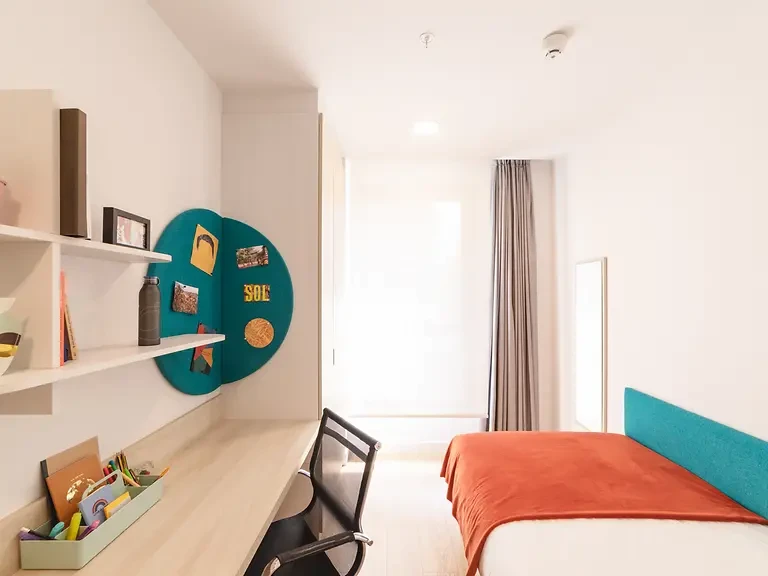
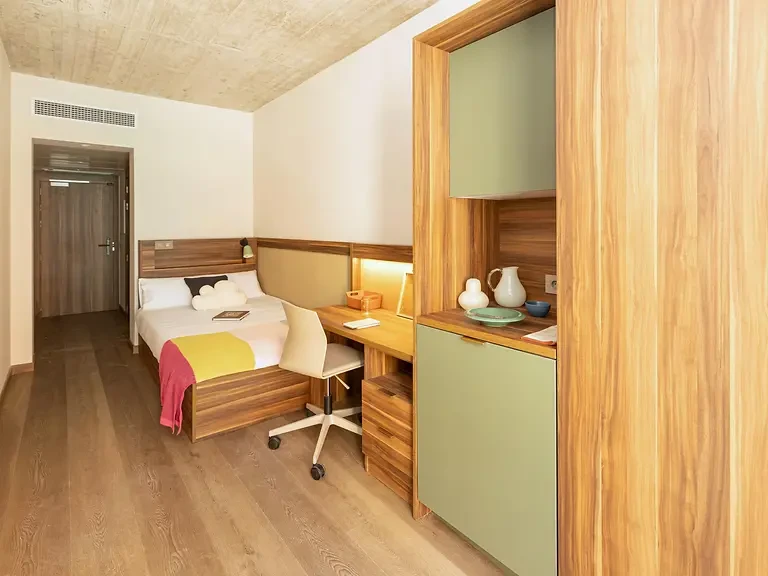
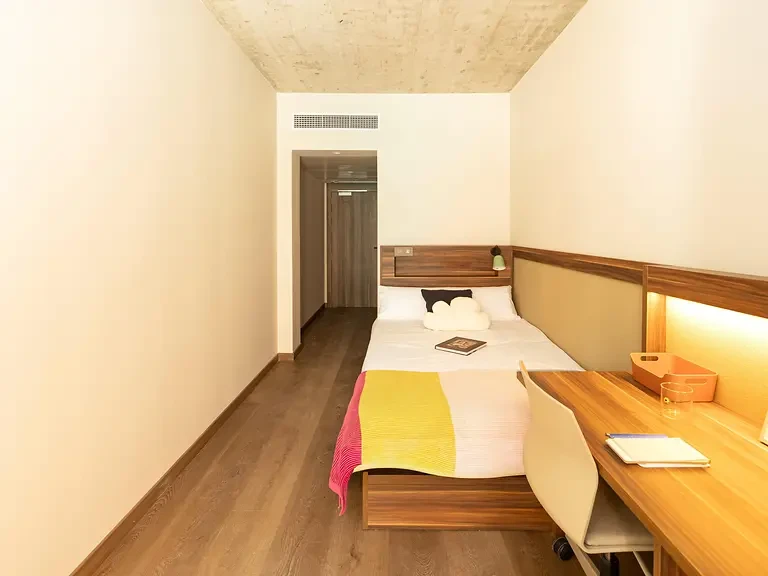
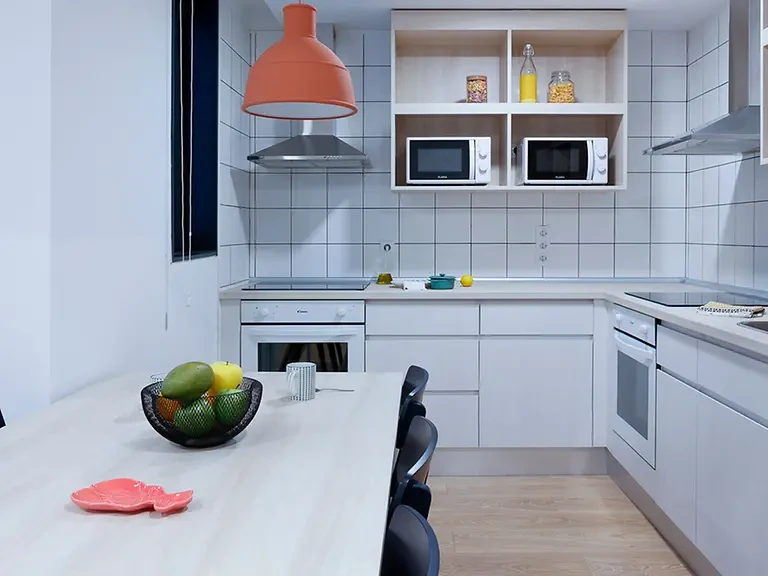
For Barcelona Business School students, the main decision is usually between a purpose-built student residence and a shared flat.
| Option |
Best for |
Advantages |
Trade-offs |
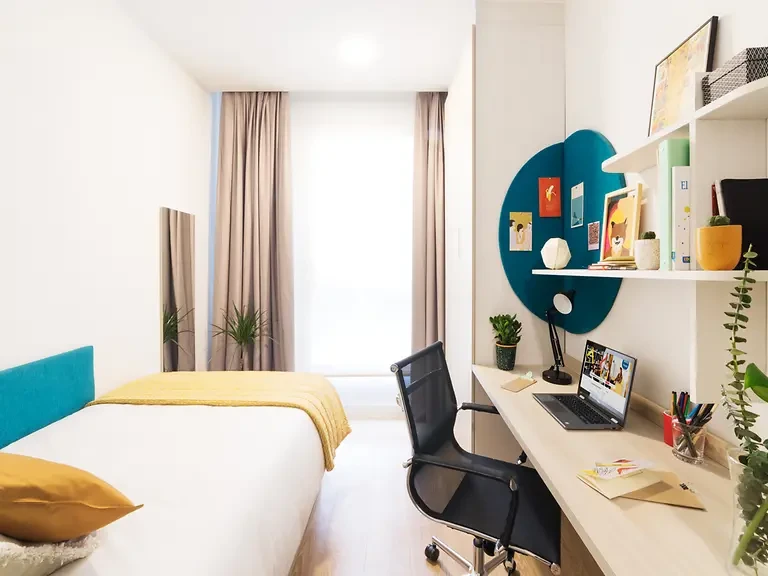
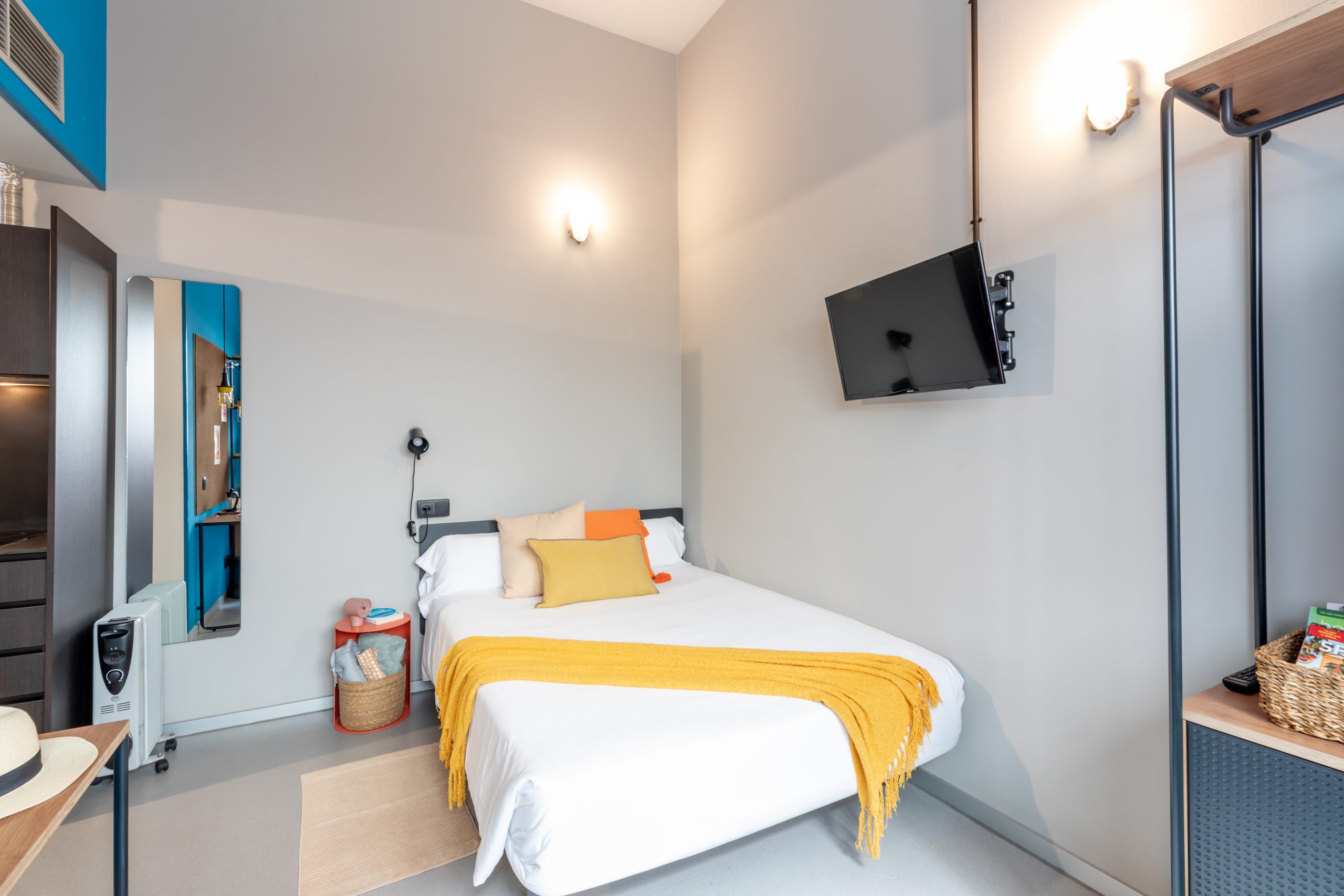
| PBSA / student residence |
First-time arrivals, international students, students who want simplicity |
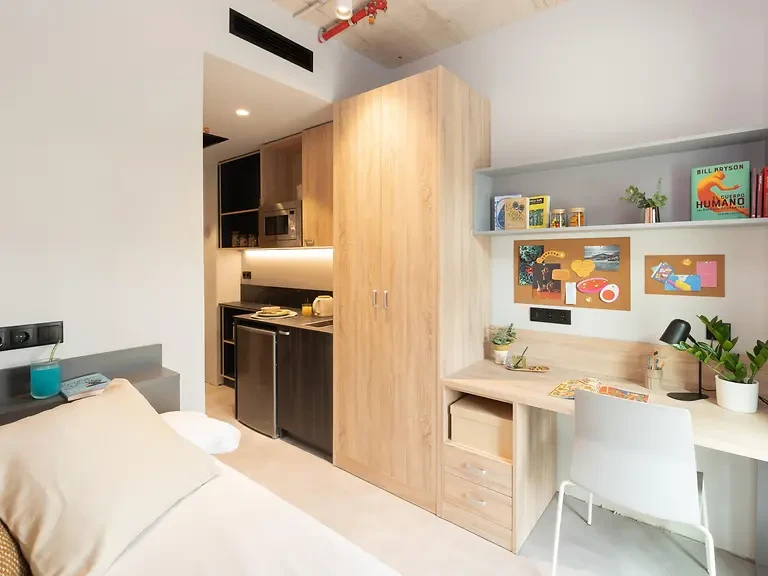
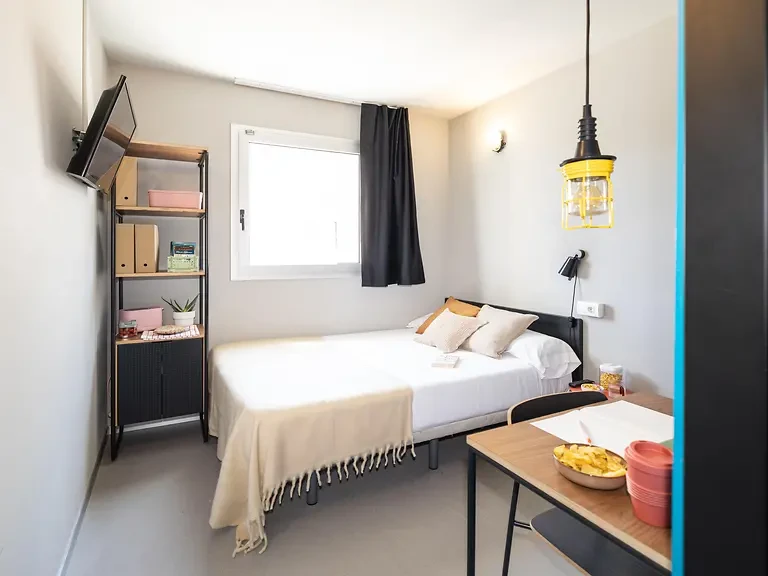
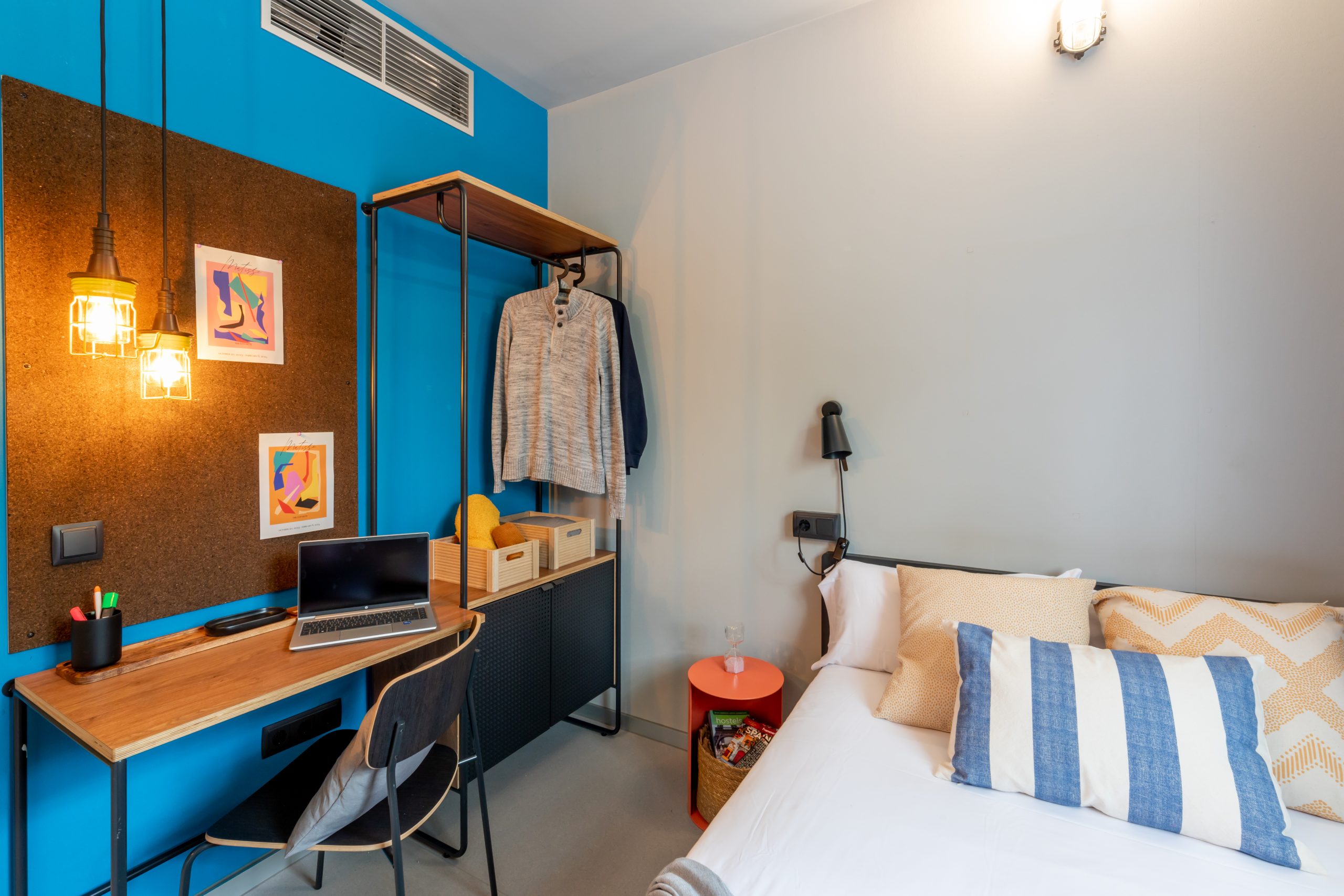
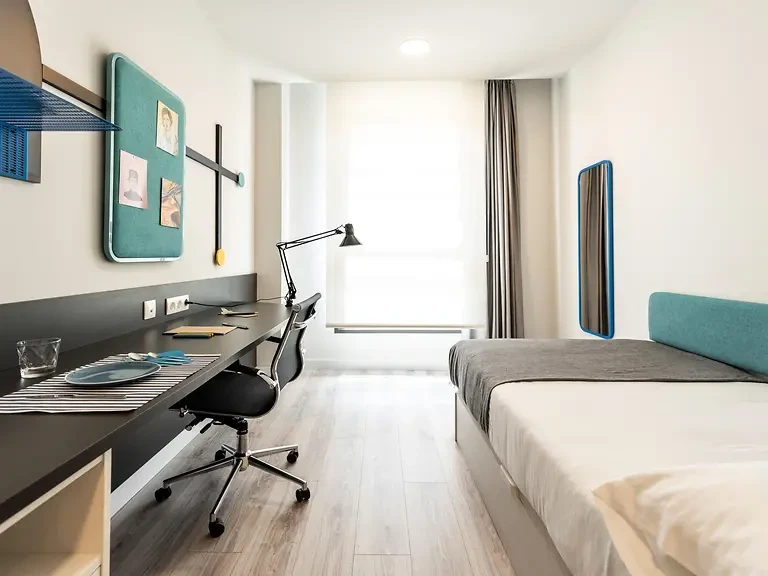
Bills often bundled, furnished rooms, clearer rules, easier move-in |
Usually pricier than the cheapest flat share |
| Shared flat |
Students who want flexibility and better value |
Lower cost, more choice, more local feel |
Contracts vary, bills may be separate, quality depends on flatmate and landlord |
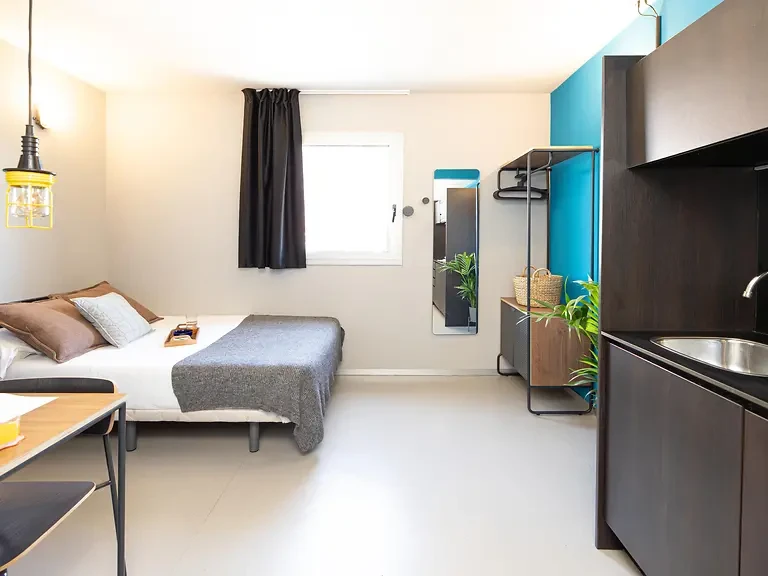
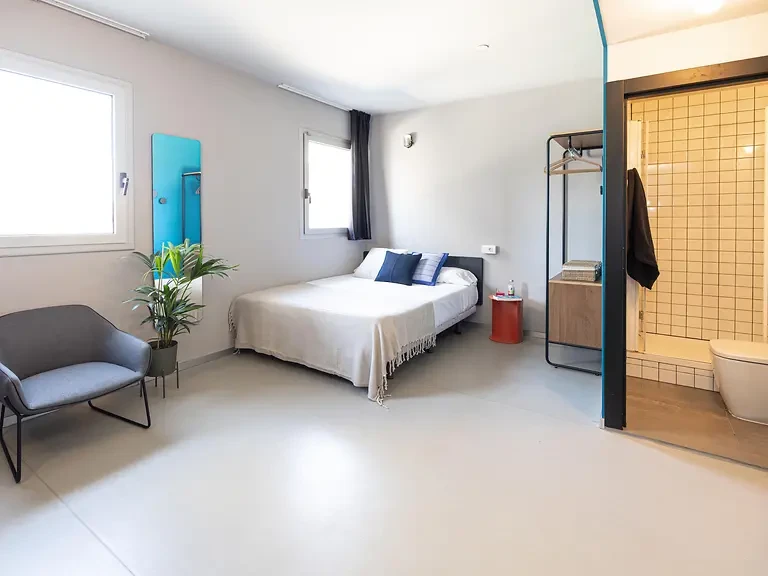
| Studio |
Students who want privacy |
Full independence and quiet |
Highest monthly cost |
| Private rental |
Longer stays and students who want control |
Can offer more space and flexibility |
More admin, more upfront checks, and more risk if you do not know the area |
For most UIBS students, PBSA is the safest starting point if you are arriving from abroad or want a simple first semester. A shared flat makes more sense if you already know Barcelona and are comfortable checking contracts carefully.
Typical monthly costs
Barcelona is not a cheap student city, and central housing near the campus will usually sit above the city average. The numbers below are a practical planning range for a student lifestyle, not a guaranteed market quote.
| Category |
Typical monthly budget |
| Student room in city centre |
€900 to €1,050 |
| Private studio in city centre |
€1,300 to €1,550 |
| Student room in outer areas |
€650 to €850 |
| Private studio in outer areas |
€950 to €1,200 |
| Food budget |
€220 to €360 |
| Transport |
€30 to €110 |
| Other spending |
€90 to €200 |
Budget notes:
- Central rooms cost more, but they can save enough commute time to be worth it.
- If you choose a flat share, ask whether utilities and internet are included.
- Studios in the centre can move quickly, especially before major intake periods.
How to choose the right accommodation
Look for four things first:
- Commute time to Rambla de Catalunya 2-4.
- Total monthly cost, not just the headline rent.
- Room type, especially whether it is furnished.
- Contract clarity, including deposits, notice periods, and what is included.
Good signs:
- The listing shows the exact address or a precise nearby street.
- Bills, Wi-Fi, and cleaning terms are written clearly.
- The landlord or residence can answer questions quickly.
- The room is available on a timeline that matches your arrival date.
Booking timeline
If you want the best choice, start early.
| When to book |
What to do |
| 4 to 6 months before arrival |
Shortlist neighbourhoods and decide your budget ceiling |
| 3 months before arrival |
Apply for PBSA and message private landlords only if you have strong documents ready |
| 6 to 8 weeks before arrival |
Compare final options and ask for the full contract |
| 2 to 3 weeks before move-in |
Confirm arrival details, keys, deposits, and bedding basics |
If your course starts in a busy intake period, do not wait for the last minute. Central Barcelona rooms can disappear fast, and the best-value properties are usually the first to go.
Transport and daily life
Barcelona's official mobility pages describe a city with metro, buses, trams, local rail, and bike sharing, plus an integrated fare system. For UIBS students, that means most daily life can be managed without needing a car.
Use this logic:
- Metro first for speed and reliability.
- Walk when you can, especially in the centre.
- Bus or commuter rail when the rent is better a little further out.
Daily-life basics to check near a flat:
- A supermarket within a short walk.
- Late-opening pharmacies.
- A laundromat or in-building laundry.
- A safe route back at night.
Scam prevention and viewing checklist
Barcelona's student market is active, and that means you need to stay disciplined.
Never pay a deposit unless you have:
- Seen the property in person or via a verifiable live tour.
- Confirmed the exact address.
- Read the contract.
- Confirmed who receives the money and why.
Red flags:
- Pressure to pay immediately.
- Refusal to show the contract.
- Prices that look far below similar listings.
- A landlord who avoids basic questions about bills, keys, or registration.
Before you commit, ask:
- Is the room furnished?
- Are bills included?
- What is the deposit and when is it returned?
- Can I see the cancellation and notice terms?
- Is the property registered and legally let?
International student paperwork
Spain does not use a UK-style "Right to Rent" check, but international students should still keep their paperwork organised. Official Spanish consular guidance for student visas says applications for stays over 90 days need to be filed well in advance, and common requirements include proof of enrolment, a valid passport, health insurance, and financial evidence.
For housing, keep these ready:
- Passport.
- Visa or residence documentation, if applicable.
- Proof of enrolment or offer letter from UIBS.
- Bank statements or sponsor evidence.
- Spanish tax and tenancy documents if the landlord asks for them.
If you are moving from abroad, a residence that already understands international students is often the easiest first step.
Tenancy cheat sheet
Before signing, check the contract for:
- Full address and landlord details.
- Start and end dates.
- Deposit amount and refund rules.
- What bills are included.
- Break clause or early-exit terms.
- Furniture inventory.
- Responsibility for repairs.
If anything is missing, ask for it in writing. A good contract should make the living situation obvious before you hand over money.
What to pack
Pack light, but pack for your first week.
Bring:
- Passport and travel documents.
- A plug adapter if needed.
- Basic toiletries.
- A laptop charger and backup cable.
- Copies of your documents.
- A few days of clothes and one warmer layer.
Usually provided in PBSA or furnished flats:
- Bed and mattress.
- Desk and chair.
- Wardrobe or storage.
- Basic kitchen equipment in shared spaces, depending on the residence.
Always confirm what is included before arrival. "Furnished" can mean very different things from one listing to another.
Accessibility and special requirements
If you need step-free access, a larger room, or a quieter environment, say so early. Central Barcelona has older buildings, so not every flat is equally accessible.
Ask about:
- Lift access.
- Step-free entry.
- Wide doors and accessible bathroom layout.
- Quiet floor or room orientation.
- Proximity to the nearest metro lift or accessible stop.
If accessibility matters, PBSA is often easier than a private flat because the provider can confirm features in writing.
Bottom line
For Barcelona Business School (UIBS), the best housing strategy is simple: keep the commute short, stay close to Eixample if you can, and favour housing that makes international arrival easier rather than more complicated.
If you want the smoothest option, start with a central PBSA or a well-run shared flat near Dreta de l'Eixample or Sant Antoni. If you want better value, move one step further out but keep a strong metro connection.